Trenches in Transplant Surgery
Sabin Subedi 58 episodes Nov 14, 2026
Trenches in Transplant Surgery explores advances and persistent challenges in abdominal transplant surgery. It discusses machine perfusion and normothermic regional perfusion as tools for organ preservation and donor utilization, along with ischemia–reperfusion injury, biliary complications in DCD grafts, and the logistics of perfusion platforms. The show also considers how transplantation is moving toward planned, daytime practice and the longer-term goal of organ banking. It is independent educational commentary created with AI assistance and is not a substitute for institutional protocols or clinical judgment.
Episodes
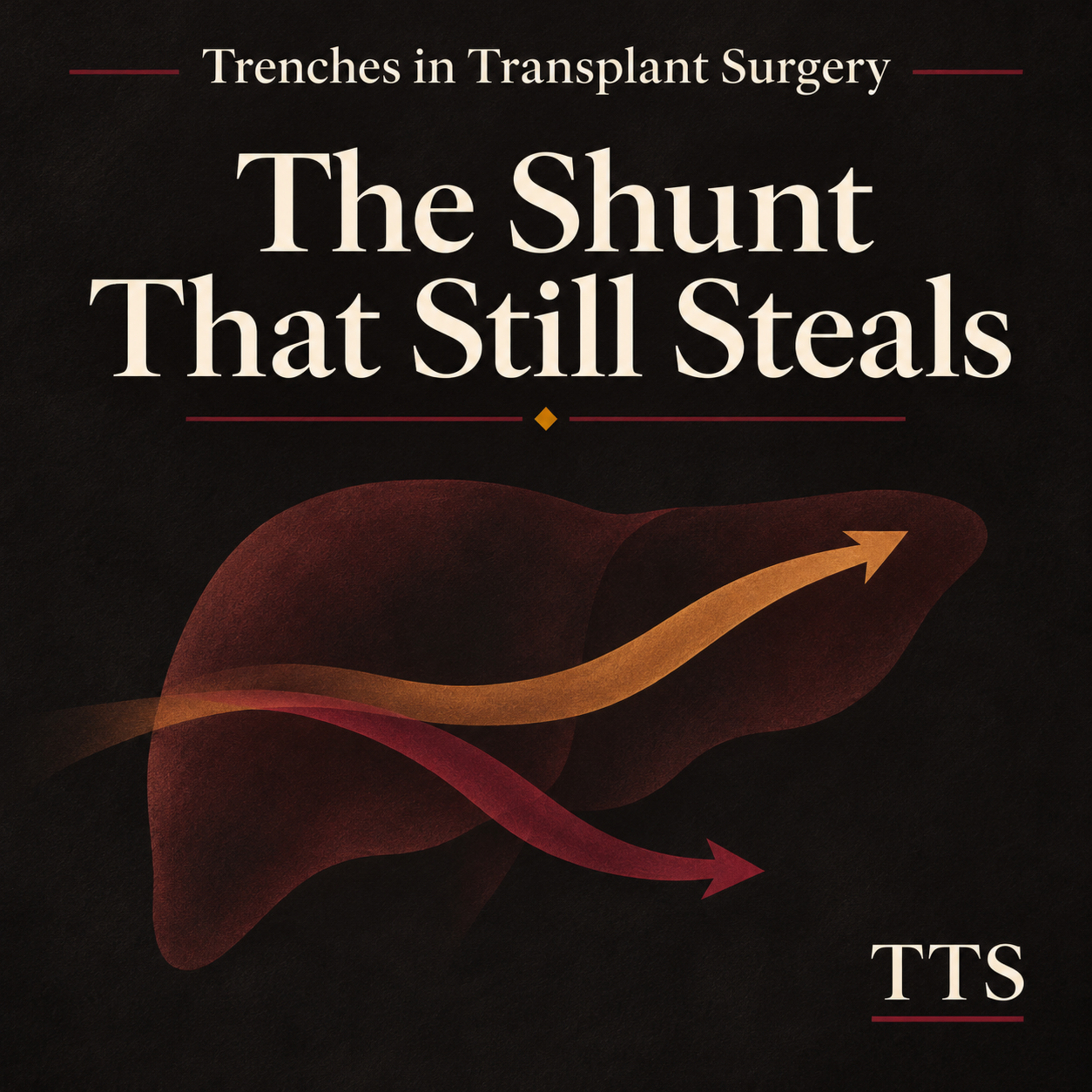
The shunt that still steals
In this fictional LDLT case, a large splenorenal shunt causes persistent portal hypoperfusion despite patent vascular anastomoses. Temporary shunt occlusion raises portal flow from 390 to 980 mL/min, with an acceptable pressure increase from 11 to 14 mmHg and preserved arterial perfusion.Preferred action: Directly ligate the accessible shunt while preserving left renal venous drainage, then reasse
The Cr is 6.4. Would you accept this kidney?
A clinical case study addressing whether to accept a high-risk kidney from a donor with severe acute kidney injury and dialysis dependence. Through this scenario, the text emphasizes that donor dialysis does not automatically signal permanent organ failure and that biopsy findings must be interpreted cautiously alongside perfusion trends. Experts recommend conditional acceptance by carefully balan
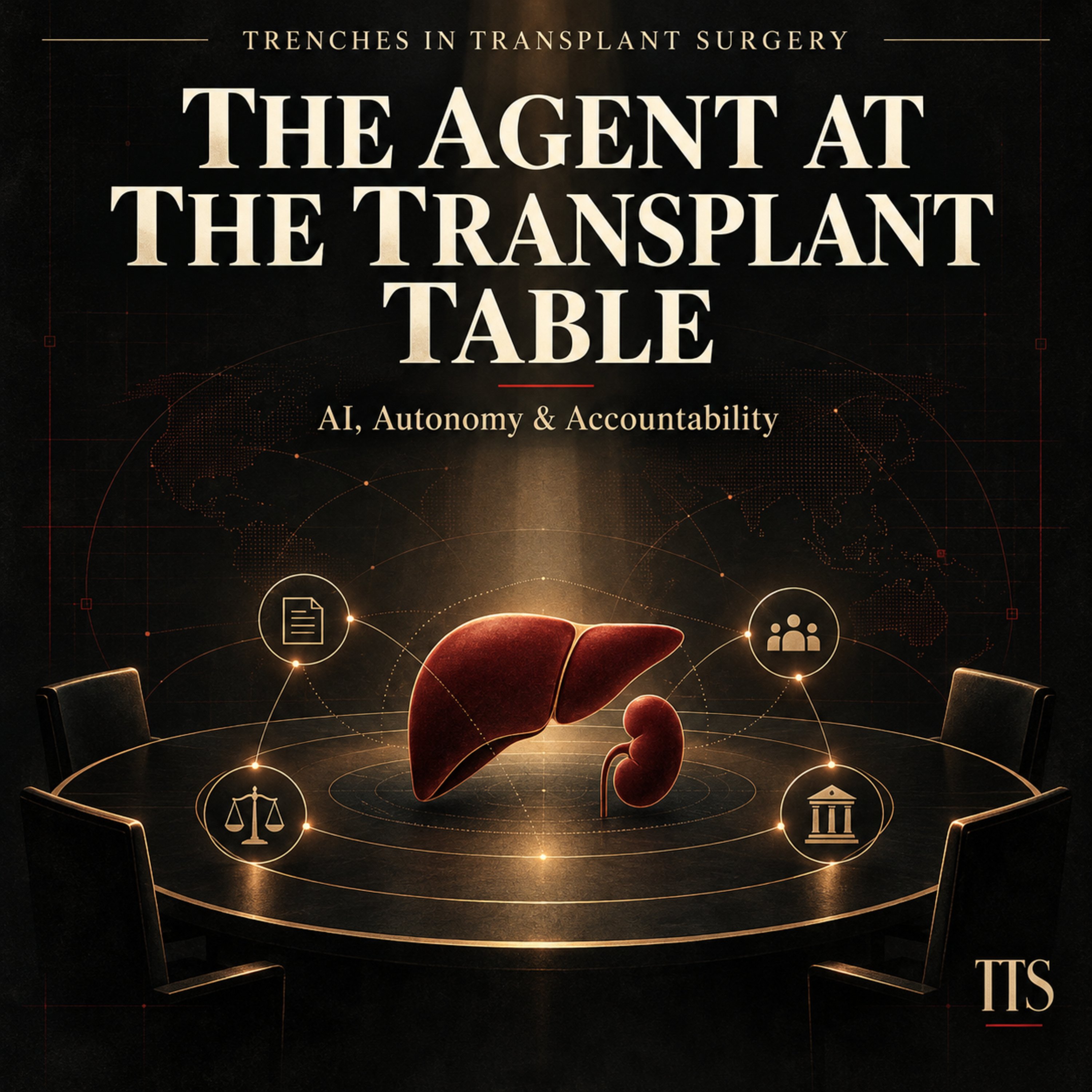
AI Transplant Agents: Autonomy and Accountability
This episode examines the integration and ethical implications of artificial intelligence in healthcare, focusing heavily on organ transplantation and patient referral processing. Platforms like Afflo utilize real-time transactional data to streamline clinical workflows, from parsing faxed referral documents to predicting organ graft survival and waitlist risks. Concurrently, medical institutions
Too Sick to Transplant?
Acute-on-chronic liver failure is a critical medical syndrome characterized by the acute deterioration of chronic liver disease, resulting in severe organ failures and high short-term mortality. The condition is primarily driven by an excessive systemic inflammatory response triggered by factors such as bacterial infections, alcohol abuse, or viral hepatitis relapses. Because traditional scoring s
Liver Allocation Paradox and HCC Priority
Liver transplantation for hepatocellular carcinoma (HCC) requires balancing tumor biology, medical urgency, and waitlist equity, as standard Model for End-Stage Liver Disease (MELD) scores often fail to capture cancer progression risks. Recent policy shifts, such as the adoption of MMaT-3 and donor-hospital exception frameworks, have successfully equalized transplant rates between cancer and non-c
Upfront vs Back to Base Liver Perfusion
This episode examines the critical oversight in liver transplantation literature where the broad label of normothermic machine perfusion (NMP) is used to describe fundamentally different preservation workflows. They emphasize that comparing portable organ care systems initiated at the donor site against back-to-base platforms connected after cold transport requires separating preservation timing f
Before the Waiting List: Preventing Liver Transplantation
This episode emphasizes that liver transplantation is often preceded by years of progressive disease that can sometimes be intercepted through proactive clinical intervention. While an initial diagnosis does not automatically dictate a future transplant, healthcare providers must address modifiable exposures like alcohol consumption alongside treatable metabolic risks to successfully manage liver
Beyond Insulin: The Promise and Price of Islet Transplantation
Islet transplantation represents a promising approach to restoring insulin production, though achieving a comprehensive solution requires overcoming significant hurdles related to cell supply, engraftment, and immune rejection. While FDA-approved treatments like Lantidra and emerging alternatives such as zimislecel demonstrate strong clinical efficacy in halting severe hypoglycemia and achieving i
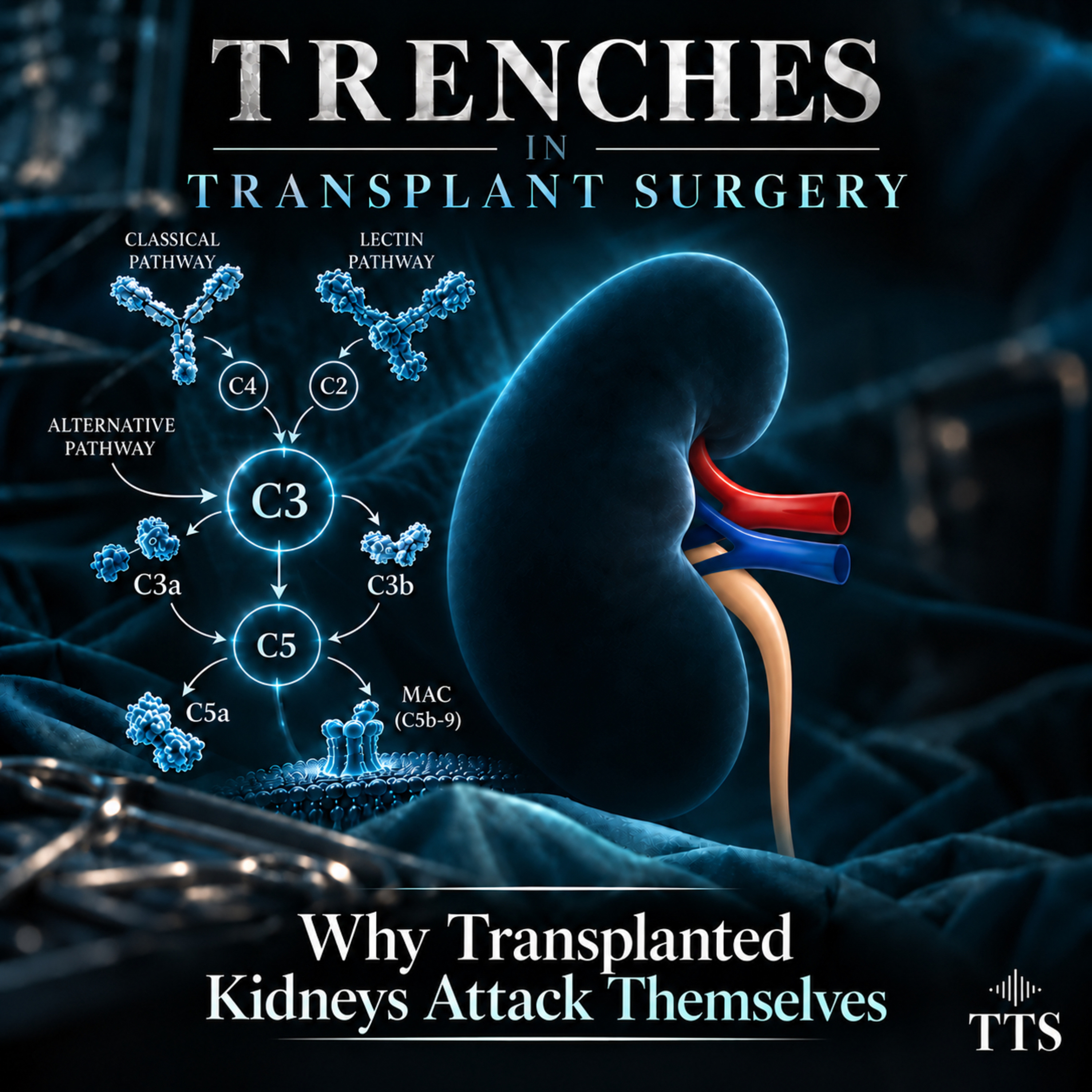
Why Transplanted Kidneys Attack Themselves
The complement system is emerging as a major determinant of kidney transplant injury, rejection, and recovery. Rather than acting only as a terminal lytic pathway, complement connects innate and adaptive immunity and contributes to ischemia/reperfusion injury, delayed graft function, T-cell activation, antibody-mediated rejection, and thrombotic microangiopathy.The most clinically important periop
Edit the Disease - or Replace the Liver?
Edit the Disease - or Replace the Liver? examines whether mRNA therapy, gene replacement, CRISPR and base editing could eventually prevent the need for liver transplantation.Human studies already show that therapeutic mRNA can temporarily replace missing hepatic enzymes, while gene editors can modify hepatocytes after intravenous delivery. Early BEAM-302 results in alpha-1 antitrypsin deficiency a
Abdominal Organ Procurement as Advanced Surgical Training A Contemporary 12-Week Curriculum — 2026 Update
This episode makes the case that abdominal organ procurement—especially DBD recovery—is one of the most underused training environments for major abdominal surgery.The central argument is that procurement should not be viewed simply as “organ removal.” A well-structured DBD recovery exposes trainees to the supraceliac and infrarenal aorta, IVC, renal hila, porta hepatis, celiac axis, SMA, mesenter
Rethinking the Liver Donor Risk Index
The Number on the Offer: Rethinking the Liver Donor Risk IndexThe liver donor risk index helped transplant teams quantify donor-associated graft risk. But an organ-offer decision requires more than a score: it depends on the recipient’s urgency and reserve, procurement findings, preservation and transport, operative complexity, and the consequences of continued waiting.This episode examines why we